
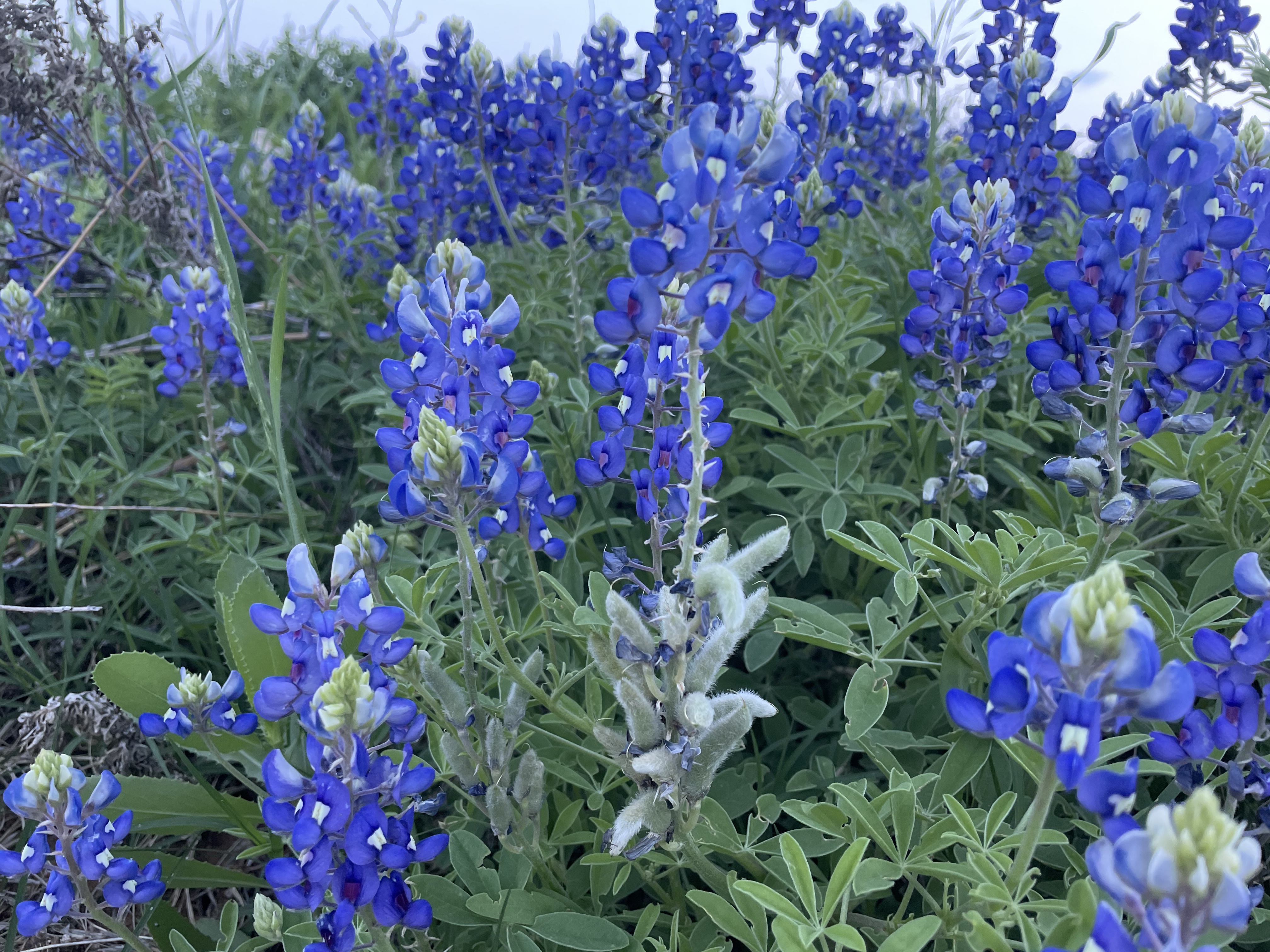
On March 7, 1901, the Twenty-seventh Texas Legislature adopted the bluebonnet, flower of the annual legume Lupinus subcarnosus, as the state flower. The flower’s popular name derives from its resemblance to a sunbonnet. It has also been called buffalo clover, wolf flower, and, in Spanish, el conejo (“the rabbit”)
Texas State Flower: The Bluebonnet & The Amazing Story Behind It
Bluebonnets typically germinate in the fall and then peak in mid to late April and can often be seen blooming in fields and roadsides throughout central and south Texas. They are not hard to spot as their centers typically have while or yellow spikes and the flower can grow to around 1 foot tall.
The origins of the Bluebonnet is chalked full of myths, legends, and quirky stories, but the flower remains one of the most beloved and recognizable symbols of the great state of Texas. The plants determination to come back, year after year, despite soil and weather conditions, is symbolic of the resilient people who call Texas their home.
Why is the Texas State Flower the Bluebonnet?
After a heated flower war in 1901, the National Society of Colonial Dames of America successfully convinced the Texas legislature to choose the bluebonnet, a name that paid homage to the many brave Texas pioneer women.
The first flower nominated was the cotton plant which was chosen because cotton is symbolic of Texas’s economic independence and growth. Shortly after, a legislature dubbed “Cactus Jack,” nominated the pear cactus for its hardiness and strength. Horrified by the ugly flower choices, the National Society of Colonial Dames of America nominated the bluebonnet. Although cotton was likely to pass, the women who made up the National Society of Colonial Dames of America would not go down without a fight. They displayed paintings of bluebonnets on the floor of the legislature and made floral arrangements of bluebonnets to adorn each politician’s desk the day of the voting. Sure enough, the bluebonnets were able to win the vote with its striking beauty.
While the Lupinus subcarnosus species was originally chosen, it also happened to be the least attractive of the Bluebonnet varieties. As a result, in 1971, the legislature decided to settle the debate by combining all varieties of bluebonnets under the official state flower. According to Flo Oxley, a program coordinator at the Lady Bird Johnson Wildflower Center, “After initially naming the Lupinus subcarnosus as the state flower, further debate emerged when people discovered that another species existed. They solved the problem by basically writing legislation that said those two species plus any other that happened to show up in the future would come under the umbrella of the state flower.” Today, this includes Lupinus subcarnosus, Lupinus texensis, Lupinus havardii, Lupinus concinnus, Lupinus plattensis, and Lupinus perennis. Although Bluebonnets started as a controversial decision for legislation, now according to historian Jack Maguire, “the bluebonnet is to Texas what the shamrock is to Ireland, the cherry blossom to Japan, the lily to France, the rose to England, and the tulip to Holland.”
And now you know…..
 The Lively Blog of Thoughts